

Industrial Metal Powders Australia: Select Alloy and Mesh Size
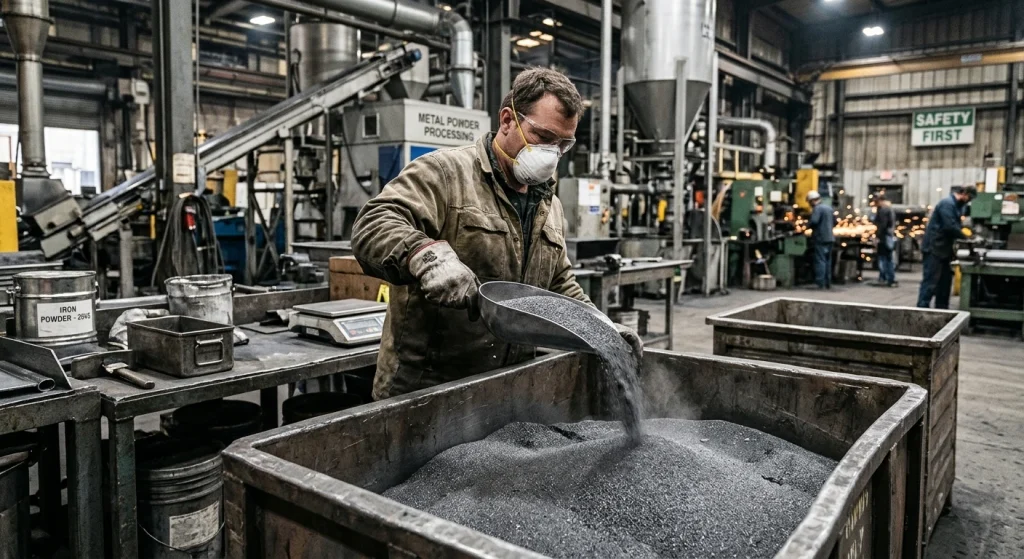
Select industrial metal powders in Australia with PM Distributors by matching alloy and mesh size to your process, specifications and project demands.
Industrial metal powders are specified by composition and particle-size distribution, not by alloy name alone. A suitable order matches the powder chemistry, mesh range, process conditions and required batch documentation before production begins.
What Should Buyers Specify Before Ordering?
Buyers sourcing industrial metal powders in Australia should begin with the finished component or process requirement. Pressing, sintering, thermal application and blending can place different demands on flow, packing behaviour, surface area and consistency.
State the intended process, target alloy, acceptable chemistry range, required quantity and any certification needs. We supply metal powders and industrial components backed by technical material information that can help buyers compare available categories without assuming every grade will suit every production method.
How Do Alloy and Mesh Size Affect Selection?
Alloy choice influences corrosion behaviour, conductivity, hardness potential and compatibility with later processing. Mesh size describes the sieve range used to classify particles; it should be read with the complete particle-size distribution rather than treated as a stand-alone quality rating.
Research on metal-powder characterisation and flowability found that particle size, distribution, shape and test method affect flow behaviour. Confirm whether the quoted mesh value describes a retained fraction, passing limit or full distribution. Similar mesh labels can mask differences in shape, apparent density and fine-particle content, so mesh alone is insufficient for selection.
What Details Strengthen a Powder Enquiry?
A complete enquiry reduces back-and-forth and helps the supplier identify obvious specification gaps. Include the following details:
- Application: Name the component, coating, blend or production stage where the powder will be used.
- Alloy requirement: Provide the nominated grade, chemistry limits or an approved equivalent where substitutions are permitted.
- Particle range: State the required mesh or micrometre range, including any limits on oversize and undersize material.
- Process conditions: List compaction, sintering or application conditions that may affect flow, packing or compatibility.
- Supply documentation: Confirm quantity, packaging, batch traceability, certificates and delivery timing needed for purchasing approval.
How Can Buyers Avoid Specification Errors?
Do not copy a previous powder description without checking the current drawing, tooling and process settings. Changes in density targets, feed systems, finish requirements or downstream heat treatment can make an old specification unsuitable even when the alloy name remains unchanged.
Material selection becomes clearer when buyers compare metals used in powder metallurgy against the required alloy characteristics, mesh range and manufacturing process. Particle behaviour also affects density and finished-part consistency, making metal powder compaction and porosity control relevant during specification, although final approval should remain with the manufacturer, engineer or authorised process owner.
Source Industrial Metal Powders in Australia
PM Distributors supplies industrial metal powders in Australia for a range of manufacturing and powder-metallurgy applications. Available alloy grades, mesh sizes, quantities and supporting documentation should be confirmed against the requirements of each process.
Provide the required alloy, mesh range, quantity, application and certification details when enquiring. Contact us to check available options and receive product information relevant to your manufacturing needs.
Optimized by: Netwizard SEO