
Sintered Silencers for Harsh Industrial Equipment Requiring Corrosion Resistance
Source sintered silencers across Australia by confirming BSPFI thread, exhaust flow, pressure, temperature and environmental exposure.
Sintered silencers reduce pneumatic exhaust noise by dispersing discharged air through porous metal. At PM Distributors, we list cone silencers in three BSPFI connection sizes for industrial enquiries across Australia.
How Do Sintered Silencers Reduce Pneumatic Exhaust Noise?
A pneumatic valve can release compressed air rapidly, producing a sharp exhaust sound. A silencer fitted to the exhaust port allows that air to pass through a porous element before discharge. This process spreads the flow and lowers the sound at its source, although the result depends on the machine, pressure, flow and installation.
Our filters and silencers range includes cone silencers with 1/4-inch, 3/8-inch and 3/4-inch BSPFI connections. Buyers should treat those listed sizes as the starting point, then confirm the exhaust-port thread and operating conditions before ordering.
What Must Buyers Confirm for Harsh Operating Conditions?
Suitability for a harsh environment cannot be judged from a broad product name alone. Moisture, washdown chemicals, airborne contaminants and temperature may affect suitability. The current PM Distributors product table confirms connection sizes, but it does not publish a material grade, corrosion rating, pressure limit or temperature limit for these cone silencers.
A useful enquiry identifies the details that can change product suitability:
- Connection thread and size: Confirm the BSPFI size and the mating exhaust-port specification.
- Pneumatic conditions: State the working pressure, expected exhaust flow and duty cycle.
- Exposure: Describe moisture, washdown products, salt, dust or other contaminants.
- Temperature: Record the normal and peak temperature near the exhaust point.
- Existing component: Include a part number, clear photograph or measured dimensions when available.
Why Are Thread Details Not Enough for Product Matching?
A matching thread only confirms that two connections may fit mechanically. It does not confirm acceptable airflow, backpressure, noise reduction or resistance to the surrounding environment. Buyers should check the equipment manual and obtain the machine maker’s specifications where possible.
For replacement enquiries, the original silencer marking may also narrow the search. Our team can compare the information submitted against the products we list, but an incomplete brief invites a poor match and wasted downtime. Supplying the operating details upfront creates a cleaner, faster enquiry.
Can a Silencer Replace a Workplace Noise Assessment?
No. A pneumatic silencer is one possible source-control measure; it does not prove that workplace exposure is safe or that every noise pathway has been controlled. Safe Work Australia explains that hazardous noise can cause permanent hearing loss and that businesses must manage the associated risks. Its workplace noise information outlines duties, exposure standards and risk controls.
Contamination or blockage may alter exhaust performance and create backpressure, so inspection intervals should follow the equipment maker’s instructions and site procedures. Any product decision must remain compatible with the pneumatic system rather than being based on thread size alone.
Enquire About Sintered Silencers in Australia
Our pneumatic backpressure article explains why a restricted exhaust path can affect system behaviour. Use it as background only; the machine manufacturer’s requirements remain the basis for selecting and maintaining the silencer.
PM Distributors lists sintered silencers for 1/4-inch, 3/8-inch and 3/4-inch BSPFI connections. We can review the product details supplied with an enquiry, but final suitability must reflect the machine specification and operating environment.
Send us the exhaust-port size and operating details for a product enquiry. We will check the listed range and respond with the relevant next step.
PM Distributors supplies custom sintered components that can reduce machining waste and unit costs for suitable medium-to-high-volume production runs.
Custom sintered components can lower machining costs when a part is suitable for repeat powder-metal production and can be formed close to its finished shape. At PM Distributors, we help Australian manufacturers compare that option with machining from solid stock before they commit to a production approach.
How Custom Sintered Components Reduce Machining Costs?
The direct answer is simple: less metal needs to be cut away. Powder is compacted in precision tooling, sintered and, where required, sized or finished. A near-net-shape part may therefore need fewer turning, milling or grinding operations than a component produced entirely from bar or billet.
That can reduce machine time, swarf, cutting-tool consumption and repeated handling. The Metal Powder Industries Federation also identifies improved raw-material utilisation and the elimination of costly secondary machining among powder metallurgy’s established advantages. Savings are application-specific, however; they depend on geometry, tolerances, material, quantity and tooling investment.
When Does Powder Metallurgy Deliver the Strongest Cost Case?
Powder metallurgy is a mass-production process, so its commercial case generally becomes stronger across medium-to-high-volume runs. Our technical information on sintered components confirms that accurate shapes can be compacted and sintered at low unit cost, with repeatability maintained across production.
A useful assessment should examine:
- Annual quantity: Tooling cost must be spread across enough parts to produce a credible unit-cost advantage.
- Part geometry: Features formed in the die may remove operations, but some undercuts, threads or cross-holes can still require secondary work.
- Tolerance and finish: Tight dimensions or specific surfaces may require sizing, coining, grinding or machining after sintering.
- Material and duty: Strength, hardness, corrosion resistance, wear conditions and appearance must match the application rather than a price target alone.
Which Parts Are Practical Candidates for Custom Sintering?
Our website supports custom-made sintered parts in a wide range of shapes and sizes, including bearings, cams, flanges, impellers, levers and sprockets. These examples do not mean every design should be converted. A defensible decision starts with the drawing, functional requirements and expected volume.
Parts with repeatable geometry and substantial material removal are obvious candidates for review. Smaller off-standard quantities may be better machined from our solid or hollow bar stock. For designs that still need finishing, our article on secondary operations in powder metallurgy explains why machining, sizing, coining and impregnation may remain appropriate rather than being treated as process failures.
What Should You Send for an Accurate Cost Assessment?
A vague request produces a vague comparison. To assess feasibility and pricing, send us a dimensioned drawing or sample, required material or operating conditions, critical tolerances, surface requirements, annual quantity and delivery expectations. We can then review whether a stocked product, machinable bar or custom sintered option fits the requirement.
Reduce Production Waste with Custom Sintered Components
Custom sintered components can reduce machining costs, but only when the design and production volume justify the tooling and process. PM Distributors supplies sintered components for Australian applications and can assess your specification without dressing up a poor-fit part as a guaranteed saving.
Send your drawing and forecast quantity for a practical quote assessment so we can compare the most suitable supply route for your production run.
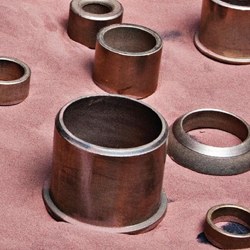
Source sintered bearing bar stock from PM Distributors for small-quantity replacement parts in Australia—send us your dimensions.
Sintered bearing bar stock can provide a practical starting point when maintenance teams need a non-standard bearing size in a small quantity. Instead of committing immediately to a custom production run, solid or hollow stock may be machined to suit documented replacement dimensions.
What Is Sintered Bearing Bar Stock?
PM Distributors supplies sintered bearing products and states that customers needing non-standard sizes in small quantities can order solid or hollow bar stock ready for machining. The finished component still needs to be designed and machined for its intended shaft, housing and operating conditions.
Bar stock is not a universal substitute for every bearing. Suitability depends on material grade, lubrication, load, speed, temperature, tolerances and environmental exposure.
When Can Bar Stock Support a Repair?
Maintenance and engineering teams may consider bar stock when:
- The original size is unavailable: An obsolete or uncommon bearing cannot be sourced in the required dimensions.
- Only a small quantity is required: The demand does not justify tooling for a longer custom manufacturing run.
- Final machining is available: A competent machine shop can produce the required bore, outside diameter, length and finish.
- Specifications can be confirmed: The existing component or drawing provides enough information for an engineering assessment.
- Operating conditions are understood: Load, speed, alignment, lubrication and temperature are documented before material selection.
Our article on sintered oil-impregnated bearings explains how the porous structure can retain lubricant. Machining allowances and finishing methods must account for the selected material and intended bearing behaviour.
What Information Should Buyers Provide?
A useful enquiry should contain more than a part description. To reduce specification errors, provide:
- Required dimensions: Bore, outside diameter, finished length and allowable tolerances.
- Application details: Shaft movement, load direction, duty cycle and operating speed.
- Environment: Temperature, moisture, dust, contaminants or corrosive exposure.
- Lubrication needs: Existing lubrication method and maintenance access.
- Quantity and timing: Immediate replacement demand and possible future volume.
Technical decisions should be reviewed by an appropriately qualified person. Engineers Australia’s mechanical engineering practice guidance provides broader context on professional mechanical engineering responsibilities.
When Is a Custom Component More Appropriate?
Bar stock may suit prototypes, repairs and limited quantities. Longer production runs or complex geometries may be better assessed as custom sintered components. PM Distributors also supplies bearings and custom-made sintered parts in a range of shapes and sizes.
Our comparison of bronze bushings and plastic bearings under heavy loads shows why material choice must follow the application rather than a generic preference.
At PM Distributors, we help Australian buyers review bearing requirements, available stock and custom-component options. Contact our team with your dimensions, quantity and operating details to request a quote.
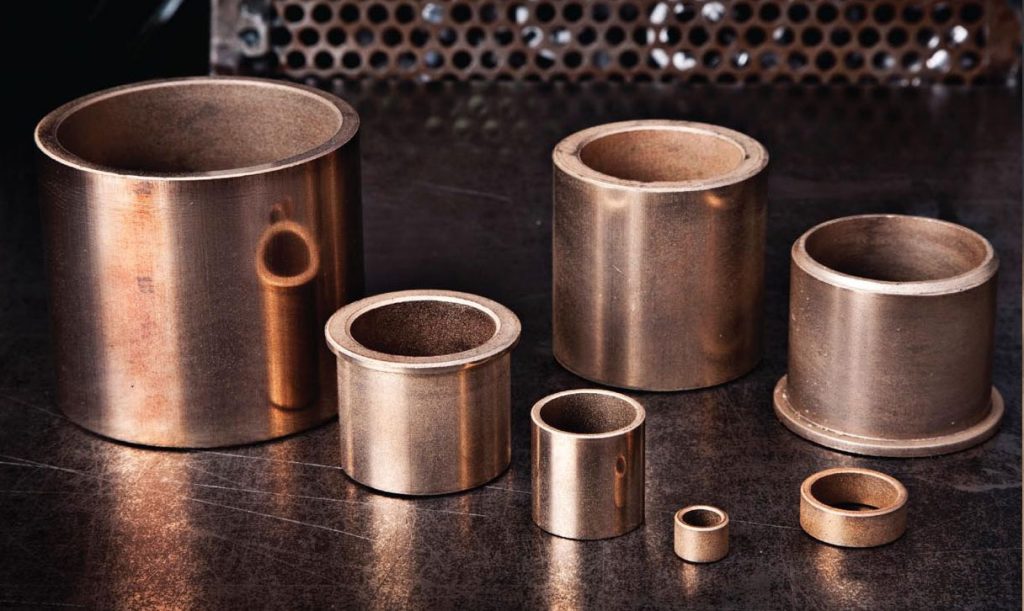
Measure your shaft and housing before ordering an imperial cylindrical bushing—send PM Distributors the dimensions and operating details.
Ordering by appearance is unreliable. A bushing that looks identical can have the wrong bore, outside diameter, length, material or clearance for the assembly. Accurate measurements and operating information reduce avoidable returns and fitting delays.
What Is an Imperial Cylindrical Bushing?
An imperial cylindrical bushing is a plain sleeve bearing specified in inch-based dimensions. It supports relative movement between a shaft and housing and may be produced from porous sintered material that retains lubricant.
PM Distributors supplies a range of imperial cylindrical bearings alongside metric cylindrical, flanged, thrust, spherical, solid and hollow sintered products. PM Distributors supplies rather than manufactures the stocked range.
Which Dimensions Must Be Confirmed?
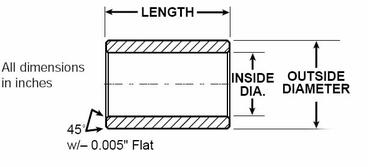
Record:
- Shaft diameter
- Housing bore
- Required bushing length
- Existing wall thickness
- Any flange dimensions
- Shoulder, chamfer or lubrication features
- Available installation clearance
- Quantity and required delivery date
Measure the shaft and housing rather than relying only on the worn bushing. Wear, distortion and removal damage can make the old component an unreliable dimensional reference.
What Operating Details Affect Selection?
Dimensions are only the starting point. Tell the supplier:
- Radial and axial load conditions
- Shaft speed and duty cycle
- Operating temperature
- Lubrication arrangement
- Exposure to dust, moisture or chemicals
- Shaft and housing materials
- Whether motion is rotary, oscillating or intermittent
- Original part number or equipment model
Do not claim that all sintered bronze bushings are maintenance-free, suitable for heavy loads or interchangeable with machined bearings. Performance depends on material, lubricant, porosity, fit, alignment, load, speed and temperature.
Why Are Sintered Bushings Used?
Powder metallurgy can produce near-net-shape components with controlled porosity and repeatable geometry. Oil-impregnated pores can release lubricant during operation and reabsorb it when stationary.
These characteristics do not guarantee lower costs or longer service life. PM Distributors publishes technical information for sintered bearings that should be reviewed with the product specification.
See the Metal Powder Industries Federation overview of powder metallurgy bearings for manufacturing context. Supplier confirmation still takes priority.
Check Fit Before Pressing the Bushing
Press fitting can alter the internal diameter of a porous bushing. Incorrect housing size, poor alignment or excessive installation force may damage the component. Installation tooling should support the bushing correctly and avoid contaminating its pores.
Where the application is safety-critical or technically uncertain, obtain engineering advice. A distributor can help identify a stocked component, but it should not be expected to redesign an assembly from incomplete measurements.
Send a Quote-Ready Bushing Enquiry
Provide a drawing where possible. If replacing an existing part, include photographs, the original part number and measurements taken with suitable instruments. State whether an exact replacement is essential or whether alternatives can be considered.
Its credible lead proposition is access to a broad bearing range and product support—not vague promises about eliminating machining scrap.
Need an imperial cylindrical bushing identified? Contact PM Distributors with the bore, outside diameter, length, application and quantity to request availability and pricing.
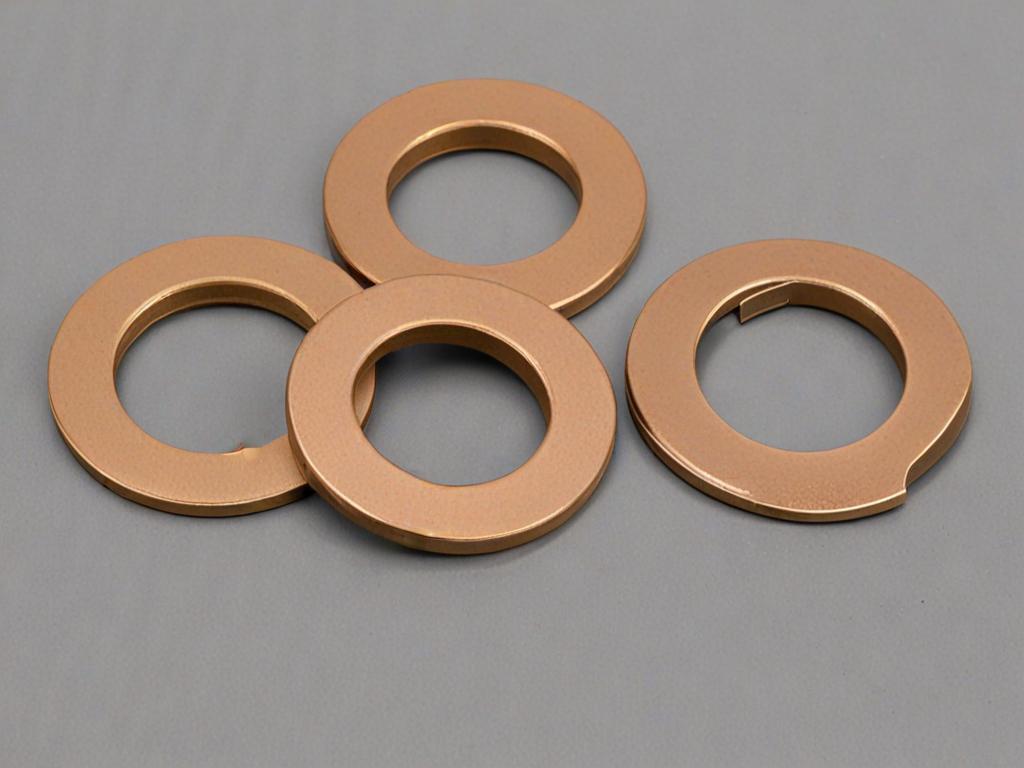
Reduce axial wear in Melbourne with sintered thrust washers from PM Distributors for reliable industrial machinery performance and longer service life.
Industrial machinery in Melbourne operates under constant pressure, vibration, and rotational force. Sintered thrust washers reduce friction between moving components, helping machinery maintain smoother axial movement during daily operation. Reliable component performance can also reduce wear-related downtime across manufacturing, transport, and agricultural equipment.
Why Industrial Machinery Suffers from Axial Wear
Heavy-duty machinery experiences constant axial movement during production cycles. Sintered thrust washers create a controlled bearing surface that reduces direct metal-to-metal contact inside rotating assemblies. Their porous structure also supports lubrication retention, which contributes to more consistent machinery performance under load.
Excessive axial friction may increase vibration, uneven wear, and component failure over time. Maintenance interruptions can slow production and increase replacement costs across industrial operations. Reliable thrust washer selection supports smoother equipment operation across demanding machinery applications.
Industrial Conditions That Increase Machinery Friction
Industrial equipment operates under harsh conditions that place ongoing stress on rotating assemblies. Selecting suitable bearing components supports more reliable machinery operation and reduces unnecessary surface wear.
Common causes of axial galling in industrial equipment:
- Continuous Rotational Pressure: Constant axial movement creates repeated surface friction that can accelerate wear across rotating machinery components during extended operation.
- High Operating Temperatures: Excessive heat may reduce lubrication efficiency and increase surface stress inside heavily loaded industrial assemblies.
- Shock-Load Conditions: Sudden force transfer during machinery operation can place concentrated pressure on contact surfaces and increase component wear.
- Dust and Contaminants: Industrial debris and abrasive particles may increase internal friction and affect the performance of rotating machinery systems.
- Misaligned Assemblies: Uneven component positioning can create irregular surface contact that contributes to scoring, vibration, and accelerated material wear.
Choosing Reliable Sintered Thrust Washers for Heavy-Duty Machinery
Industrial machinery faces constant pressure, vibration, and friction during daily operation. Reliable bearing components support smoother movement and reduce unnecessary machinery wear over time.
Common conditions linked to axial wear include:
- Continuous rotational pressure during machinery operation
- High operating temperatures inside rotating assemblies
- Sudden shock-load exposure across heavy-duty equipment
- Dust and abrasive contaminants within machinery systems
- Misaligned assemblies causing uneven surface contact
Safe Work Australia recommends regular machinery inspection and maintenance to reduce mechanical risk in industrial workplaces. PM Distributors supplies industrial bearings, including sintered thrust washers suited to demanding machinery applications.
Industrial Bearing Products for Machinery in Melbourne
Worn bearing components can increase downtime and place extra pressure on industrial machinery. Reliable replacement parts keep production moving more consistently during daily operation.
At PM Distributors, we stock sintered thrust washers suited to heavy-duty machinery used across Melbourne’s manufacturing, transport, agricultural, and engineering sectors. Our range supports businesses sourcing dependable replacement components for ongoing maintenance and machinery repairs.
Contact us today to source industrial bearing products matched to your machinery requirements.
Related Blog Articles:
Sintered Thrust Washer Bearings: How They Work for Seamless Stability
Sintered Bearings Supplier: Wide Range of Choices Available at PM Distributors
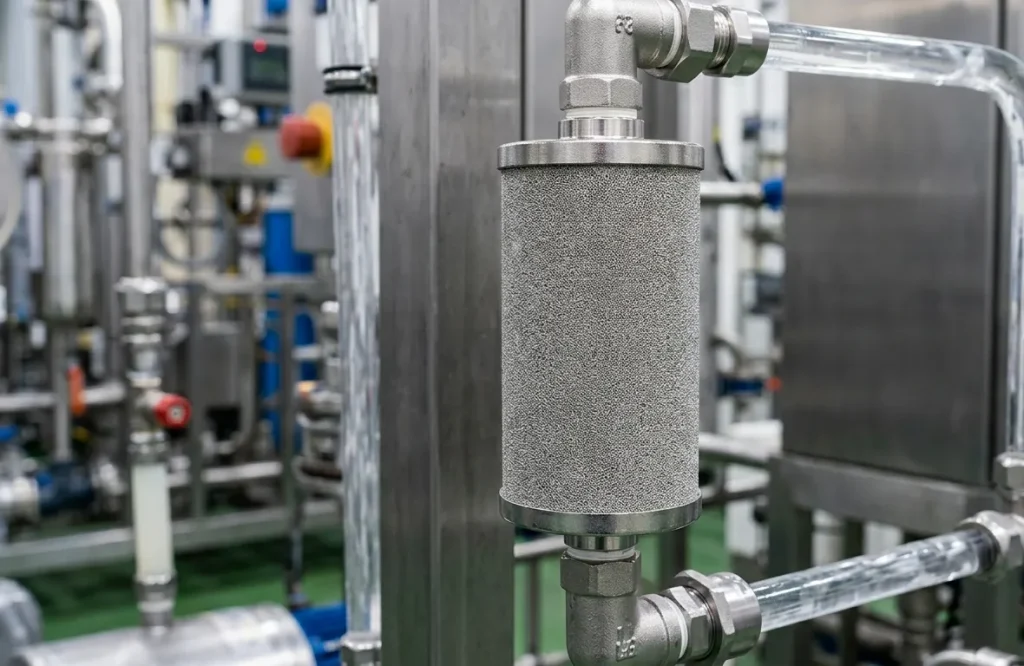
Prevent equipment downtime by installing sintered metal filters. PM Distributors supplies reliable, heat-resistant pneumatic parts throughout Australia.
Pneumatic systems often generate significant thermal energy during rapid exhaust cycles and continuous operation. Efficient airflow management is necessary to prevent internal heat build-up that can compromise sensitive seals and actuators in Australia. Integrating sintered metal filters into exhaust ports allows for controlled gas release while maintaining structural integrity under high-pressure conditions.
Regulating Thermal Spikes Through Controlled Airflow
The primary challenge in pneumatic design involves regulating exit velocity without causing excessive resistance. High-quality sintered metal filters create a porous pathway that diffuses air evenly to mitigate localised heat spikes. This diffusion process ensures that the system maintains a steady operating temperature during heavy-duty cycles.
Consistent thermal regulation protects downstream components by reducing friction-induced wear. These metallic elements handle the rigorous demands of industrial environments where plastic alternatives often fail. Proper filtration selection improves pneumatic circuit efficiency by balancing noise reduction with heat dissipation.
Maximising System Reliability with Sintered Metal Filters
Reliable exhaust management depends on a filter’s ability to handle varying flow rates without clogging. Industrial operators select these components for their unique physical properties and long-term durability.
The following benefits improve system reliability:
- Corrosion resistance: Stainless steel construction prevents rust formation in humid or chemically aggressive environments.
- Structural strength: Rigid metallic structures withstand high-pressure pulses without losing their geometric shape or pore distribution.
- High-temperature tolerance: Thermal-resistant materials ensure the filter remains functional even when exposed to extreme pneumatic heat.
- Uniform porosity: Precise manufacturing allows for predictable backpressure levels that keep the system within safe limits.
- Washable media: Reusable designs enable maintenance teams to clean the filters rather than frequently replacing them.
Optimising Exhaust Backpressure for Peak Performance
Precise backpressure control is a technical requirement for preventing sluggish response times. Using a sintered metal filter assembly allows engineers to fine-tune resistance within the exhaust line to match specific cylinder speeds.
Our team at PM Distributors recognises that local industrial operations must adhere to stringent safety and performance metrics. We align our inventory with the AS 1210-2010 Pressure Vessels standard to ensure every component manages internal stresses safely.
Maintaining a clean internal environment is just as important as managing heat for system uptime. Selecting the right micron rating ensures that airflow remains consistent throughout the entire lifespan of the machinery.
Secure High-Performance Cooling Solutions Today
Protecting your pneumatic investment requires a strategic selection of exhaust components that withstand high-cycle fatigue. Implementing the right filtration hardware ensures your equipment remains operational under the most demanding Australian conditions.
PM Distributors maintains a robust stock of sintered metal filters to help you eliminate backpressure bottlenecks immediately. Avoid the high costs of thermal damage by choosing the exact specifications your system requires for peak efficiency and safety.
Get the right parts dispatched to your site to ensure your operations run at full capacity without interruption. Contact us to secure your high-performance pneumatic components and request a quote today.
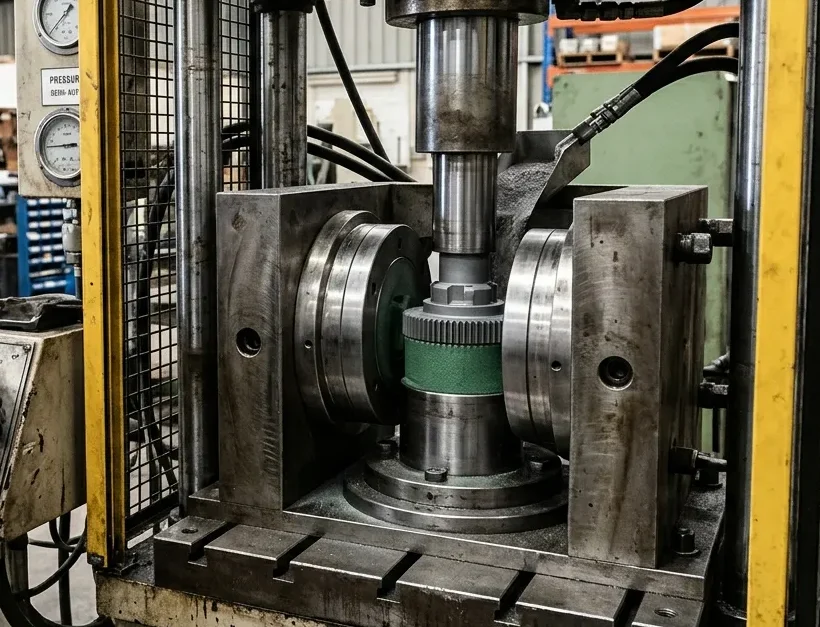
Refine part density with PM Distributors. Our metal powder compaction solutions in Australia ensure high-performance results for industrial components.
Metal powder compaction supports reliable component production across manufacturing industries in Australia. This process influences density, strength, and overall part consistency in finished components. Controlled porosity helps manufacturers meet performance requirements while maintaining efficient production.
Process Stability and Porosity Control in Metal Powder Compaction
Stable processing conditions are required to maintain uniform density across each part. Metal powder compaction can produce uneven porosity if pressure, tooling alignment, or material consistency varies during production.
Controlled production settings reduce variability and improve repeatability. Consistent powder supply supports manufacturers in maintaining stable porosity levels and avoiding disruptions during production.
Material Behaviour and Pressing Parameters
Material behaviour and pressing conditions influence how powders compact and how porosity forms within each part. Consistent control across these elements supports stable density and dimensional accuracy.
The process is influenced by the following elements:
- Particle size distribution and uniformity
- Powder shape and flow characteristics
- Lubrication balance during pressing
- Controlled compaction force application
- Pressing speed and dwell time alignment
- Tooling compatibility and surface condition
Factors Influencing Porosity Outcomes
Porosity control depends on several production variables working together throughout compaction and post-processing. Careful management of these factors helps maintain consistent outcomes across manufacturing runs:
- Powder Consistency: Stable particle size and composition support even compaction and reduce variation between batches. Reliable material supply helps maintain predictable results.
- Pressing Pressure: Balanced pressure ensures proper bonding without placing unnecessary stress on tooling. Controlled force supports uniform density across the part.
- Die Design: Accurate die geometry improves material flow during compaction. Well-machined dies help reduce uneven density zones.
- Lubrication Levels: Appropriate lubrication reduces friction between powder and tooling surfaces. Balanced lubrication helps prevent density inconsistencies during pressing.
- Sintering Conditions: Controlled heating strengthens particle bonding after compaction. Stable sintering reduces residual porosity and supports part reliability.
Enhancing Structural Integrity in Finished Parts
Refining the metal powder compaction workflow directly impacts the tensile strength and wear resistance of the final product. Low-porosity parts generally exhibit superior fatigue life, making them ideal for high-stress automotive or mining machinery.
At PM Distributors, we align material supply with recognised manufacturing standards to support components used in demanding operating environments. Our team aligns these processes with the ASTM B09 Standards for Metal Powders and Powder Metallurgy Products to guarantee that Australian clients receive parts with verified density profiles.
Advanced monitoring systems now allow for real-time adjustments to the tonnage applied during each stroke of the press. Consistent results reduce scrap rates and improve the overall efficiency of the manufacturing lifecycle across various industrial sectors.
Precision Sintering Solutions in Australia
Mastering the balance between density and porosity is the hallmark of a sophisticated production line. Successful manufacturing outcomes depend on technical precision and the right equipment to handle diverse material compositions.
At PM Distributors, we assist businesses engaged in metal powder compaction throughout Australia. We align material supply with real production conditions to support consistent processing and reliable outcomes.
Browse our range online to identify suitable materials for your operations.
Contact us to maintain consistent material input and support efficient production outcomes.
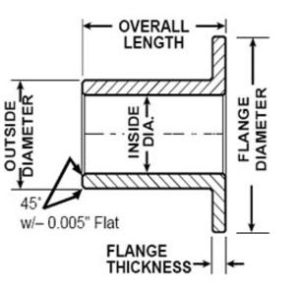 Sourcing specific imperial bearings is easy with the PM Distributors. We supply reliable industrial components for heavy-duty Australian projects.
Imperial bearings remain a practical option for Australian businesses maintaining equipment built around imperial sizing. Replacement decisions often come down to fit, material suitability, and supply consistency rather than broad product claims. Buyers need components that match the job, reduce unnecessary change-outs, and support steady operation.
Imperial Bearings Australia for Oilite and Glacier Replacements
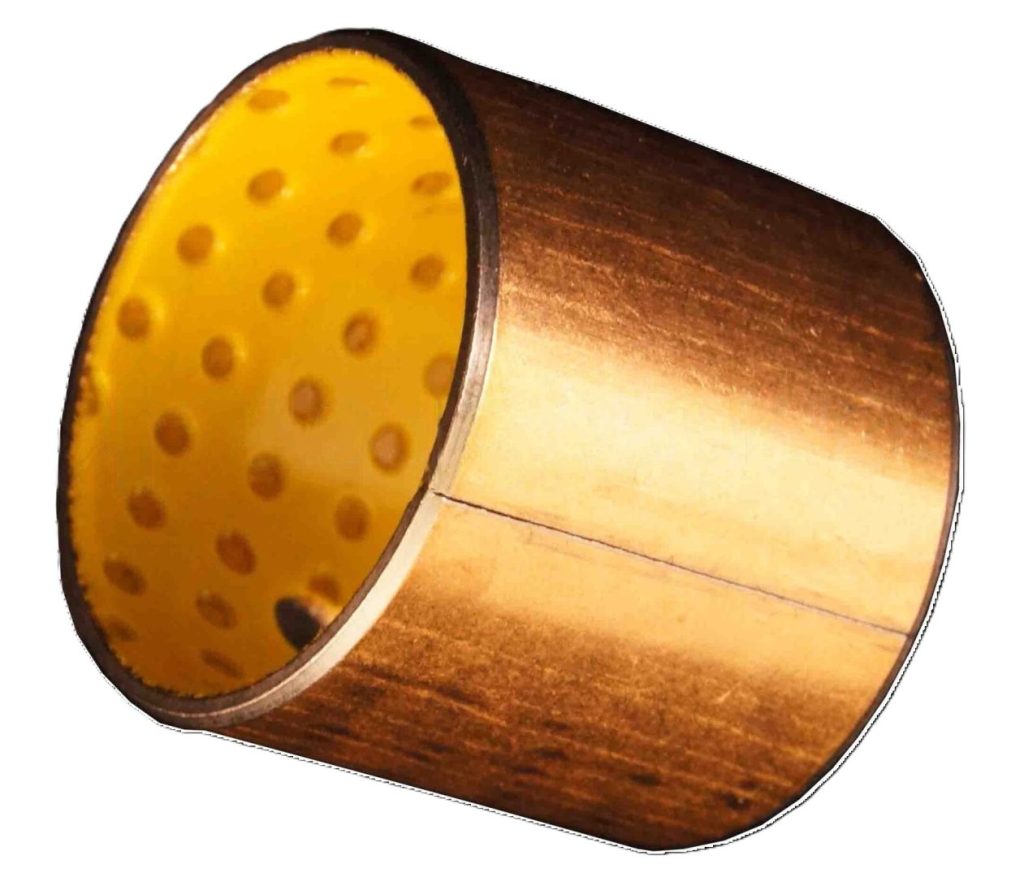
Imperial bearings are often considered when maintenance teams need a suitable replacement for worn Oilite and Glacier-style parts in legacy or ongoing industrial equipment. That decision is usually driven by sizing compatibility, operating conditions, and the need to keep machinery moving without lengthy delays.
Across Australia, procurement teams and workshop managers also need confidence that replacement stock aligns with common industrial requirements. A bearing that fits correctly, suits the application, and is available when needed can make purchasing far more efficient.
Essential Performance Features of Modern Replacements
Modern industrial components must deliver more than just a basic fit to be considered effective in high-stakes environments. These specific bronze and composite alternatives provide distinct advantages for systems requiring self-lubricating or low-maintenance solutions.
The following list details the core technical advantages of these components:
- Superior Load Capacity: Advanced material compositions allow these parts to support significant radial and axial weights under heavy stress.
- Self-Lubricating Properties: Infused oil layers or PTFE linings ensure smooth operation without the necessity for constant manual greasing.
- Thermal Resistance: Enhanced alloys maintain structural integrity even when exposed to high-friction heat levels during continuous cycles.
- Corrosion Protection: Specialist coatings prevent oxidation and rust in damp or chemically active environments common in Australian workshops.
- Dimensional Stability: Strict manufacturing tolerances ensure that parts do not expand or contract excessively during intense mechanical use.
Strategic Benefits of Choosing Quality Imperial Bearings
The transition from standard metric parts to specialised imperial bearings allows for a higher degree of customisation in complex mechanical assemblies. Our team focuses on supplying components that mirror the exact specifications of original Oilite and Glacier designs to ensure seamless retrofitting.
PM Distributors maintains consistent quality checks across all supplied components to ensure suitability for industrial use. We focus on supplying dependable hardware that supports stable operation and reduces the likelihood of premature wear in demanding environments.
Choosing the right partner for your component needs guarantees that your equipment continues to perform at its peak technical capacity. We stock an extensive range of sizes to ensure that your replacement process remains fast, accurate, and effective for your specific business.
Review our available stock online to find the right fit for your application.
Securing Long-Term Industrial Efficiency
Selecting the right hardware is a fundamental step in protecting the longevity and reliability of your mechanical infrastructure. High-performance replacements provide the durability required to thrive in a demanding industrial landscape.
PM Distributors stocks these specialised imperial bearings to ensure your machinery stays in motion without the risk of sudden component fatigue. Utilising the correct imperial specifications remains the only definitive method to maintain the integrity of legacy and high-end industrial systems.
Contact us to source the right bearing for your machinery and purchasing needs.
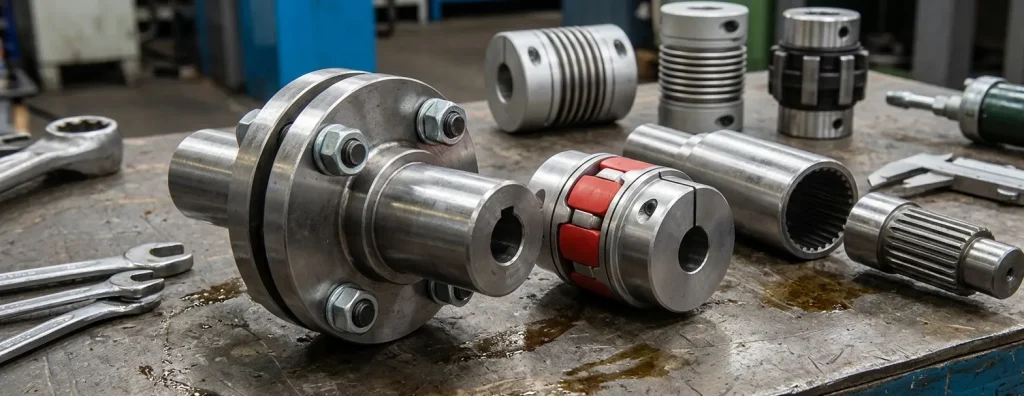
Optimise machine designs with flexible shaft couplings for OEMs from PM Distributors. Our Melbourne-based team provides sintered precision parts.
Precision manufacturing demands more than just a functional connection between shafts. Australian manufacturers face the challenge of balancing high-performance torque transmission with a streamlined, cost-effective supply chain. Sourcing flexible shaft couplings for OEMs involves a strategic shift from simple unit prices toward evaluating total landed cost and assembly efficiency.
Navigating Power Transmission Standards
Standard wrought steel components frequently require secondary boring or keyway cutting before they reach the assembly line. These post-processing steps create unnecessary bottlenecks in high-volume production environments. Original equipment manufacturers bypass the machine shop entirely by moving to a ready-to-assemble model.
Powder metallurgy allows for complex features to be integrated directly into the component during the initial press. Sintering delivers the precision required for high-speed applications without the added machine time. This process ensures every part arrives on-site and ready for immediate installation.
The Metallurgy of Flexible Shaft Couplings for OEMs
The metallurgical composition of a coupling directly influences its durability, vibration control, and ability to tolerate shaft misalignment. Flexible shaft couplings for OEMs manufactured with sintered materials offer improved stress absorption compared with traditional solid-machined hubs.
- Angular Misalignment: Occurs when shaft centre lines intersect at an angle, requiring the coupling to accommodate pivoting stress during rotation.
- Parallel Offset: Happens when shafts remain parallel, but their axes are displaced, creating shear stress that the coupling must absorb.
- Axial Float: Refers to slight axial movement along the shaft length, allowing for thermal expansion without transferring thrust loads to motor bearings.
Sintered metal contains a microscopic lattice structure that acts as a natural dampener for high-frequency motor harmonics. This controlled porosity helps absorb energy that would otherwise vibrate through the entire drivetrain. Engineers achieve superior damping results by choosing sintered hubs to manage these specific physical stresses effectively.
The Sintered Advantage: Near-Net-Shape Manufacturing
Bridging the gap between a design concept and a finished product requires a focus on material efficiency. Our team at PM Distributors leverages a unique 50-year heritage in powder metallurgy to provide near-net-shape components that minimise production waste.
Traditional CNC milling can result in 20%+ scrap material, whereas the sintering process typically produces only 3% waste. This efficiency is a primary reason why high-volume manufacturers choose sintered hubs for their most demanding machine designs.
Review comprehensive technical breakdowns of these benefits within our blog on 5 Facts about Powder Metallurgy and Its Processes.
OEM Selection Matrix: Matching Requirement to Solution
Selecting the right coupling architecture is essential for maintaining system longevity. The following matrix simplifies the decision-making process for engineering teams:
| Requirement | Recommended Coupling Type | The PM Distributors Sintering Benefit |
| High Precision/Zero Backlash | Disc or Bellows Coupling | Precision tolerances through CNC-aligned PM dies. |
| Shock Absorption | Jaw Couplings | Sintered Hubs with oil-impregnated dampening. |
| High Torque / Small Space | Gear Coupling | Sintered gears provide high torque density at low cost. |
Integrating flexible shaft couplings for OEMs into the design phase ensures the choice aligns with mechanical requirements. Our team provides technical datasheets early in the process to assist procurement staff. This collaborative approach reduces the risk of specification errors during mass production.
Sourcing Strategy: De-Risking the Australian Supply Chain
Our team at PM Distributors maintains a strategic inventory buffer to eliminate the unpredictability of international sea-freight lags. Choosing our specialists for flexible shaft couplings for OEMs secures your manufacturing lifecycle through sintered precision and immediate technical support.
Optimising a new machine design? Contact our Truganina-based engineering team for a technical review of your coupling specifications.