
Advantages of Sintering in Producing Complex Shaped Bearings
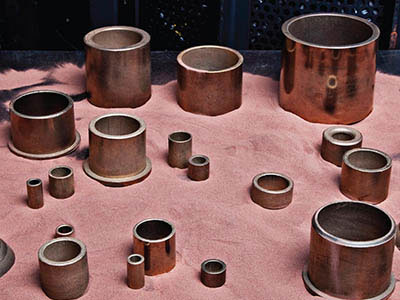
Without any difficult machining work, sintering services make it possible for engineering customers to acquire complex geometrical parts profiles. The detail-heavy components exit the powder metallurgy equipment as perfectly identical compaction densified metal elements. That, then, is a big part of a bearing manufacturer’s motivation for adopting sintering technology. Of course, there’s also that self-lubricating feature, which has been exhaustively covered in past posts.
Conventional Sintered Bearings: Baseline Advantages
Sintered bearings are made of compacted metal powders. Thanks to what’s essentially a machine-free process, PM produced rolling elements and bearing races exit their Green compaction dies as dimensionally accurate end products. Passed through the grain coalescing sintering stage, all compacted components assume a uniform microstructure, so the bearings they assemble into rarely exhibit processing flaws. Generally speaking, such defects are introduced by worn or defective machining stations, which isn’t the case when PM compacts are utilized. By the way, the seamless bearing components are mixed with additives and porosity enhancers. With a lubricant added to the atomized powder mix way back at the powder metal blending vessel, conventional sintered bearings do possess a self-lubricating feature.
Evolving Powder-Metallurgy Produced Bearings
Usually, when engineers talk about sintered bearings, there are certain assumptions. Customers assume these parts are simple bushings, which employ friction-less, self-lubricating linings. Alternatively, the bearing is a simple set of rolling elements, a series of ball bearings within a pair of concentrically arranged rings. However, there’s also a large range of complex-shaped bearings entering the market. Imagine a small brushed motor, a D.C. powered prime mover. With exotic metals and graphite linings filling out the device’s unique architectural layout, a more detail-oriented sintering process is required to facilitate the creation of such tiny shaft mounting systems. Capable of imparting more rolling element detail while keeping the grain of those moving parts fine and uniform, this type of processing environment calls for optimal compaction and sintering accuracy. No matter, thanks to new developments in the twin fields of die manufacturing technology and PM microstructure control, these tiny, intricately detailed bearing elements are now being produced en masse.
So, where are complex-shaped sintered bearings utilized? They’re the intricate devices that add special sleeving arrangements and shaft fittings on custom-designed shaft mounts. Then, shrunken smaller, intricate powder metallurgy produced bearings are used in the electronics sector. In medical equipment pumps, in CD ROM drives, and in tiny servo units, they provide grain-homogenized balance. Lighter than conventional rolling elements, thanks in part to an inbuilt capillary system, that same feature also adds an ingrained self-lubricating mechanism to intricate-profiled bearings, regardless of their size.
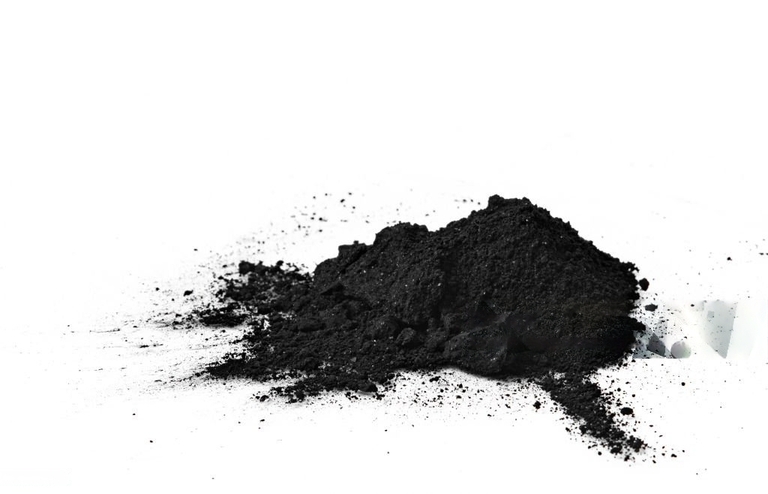
Remember, the sintering stage coalesces compacted metal objects. Pressed into shape by a die, heat is applied inside the sintering chamber. The metal doesn’t melt, but it merges and consolidates. By injecting special additives into this mix, we enhance this material coalescence phase. An increase in thermal energy temperature can’t duplicate this effect. As a matter of fact, by selecting the right sintering additive, the process temperature drops.
Metallurgically Activated Sintering
This next process augmentation works well when metals with high melting temperatures are specified. Let’s say the powder metallurgy load is composed of tungsten, an element that won’t melt until the temperature rises above 3,200°C. Titanium and platinum are two of the other metals that refuse to melt unless they’re exposed to copious quantities of heat. Anyway, although sintering operations don’t melt metals, the alloys need to soften so that the necking phase can take place. That’s not going to happen without an additive in the mix. Basically, with a powdered sintering additive like nickel or palladium in the mix, the melting temperature of tungsten drops to 1,100°C. If the metal will melt at that point, think how easily it’ll coalesce at an even lower temperature.
Sintering Additives Augment Densification Performance
Ultimately, that’s what a process engineer is after. With the supplemental material in the mix, grain boundary transitions don’t stubbornly rub against one another and hang tough. Instead, the particle transition zones diffuse so that the grains can densify properly. Now, imagine other additives, other metals in the powdered mix. If nickel can alter the thermal profile of a compacted powder workpiece, imagine what other positive features these supplemental sintering materials could impart. By adding another element or more of the same material, such as nickel, dimensional stability is gained. Other process ingredients improve grain homogenization and grain growth. Good, as soon as the process terminates, the coalesced workpiece exhibits a high degree of structural uniformity.
At day’s end, thermally active processes don’t always mesh well with metallurgically focused operations. Just ask a heat treatment engineer, and he’ll regale the querier with tales of hardening operations gone wrong. This industrial complex also uses expensive furnaces and atmospheres to create universally hardened end-products. When using sintering additives, it’s less about the atmosphere and more about the additive’s phase state. Powdered materials are one option, but then there’s also the option to add the supplement in a liquid phase, for mix homogeneity is everything. Again, by mixing in liquid or solid-phase sintering additives, densification ambiguities are eliminated. The material facilitates lower processing temperatures and predictable densification performance.